Selling a $120k/Yr App For Multiple 6 Figures
How Lotanna "Lotts" Ezeike turns underserved markets into profitable exits.
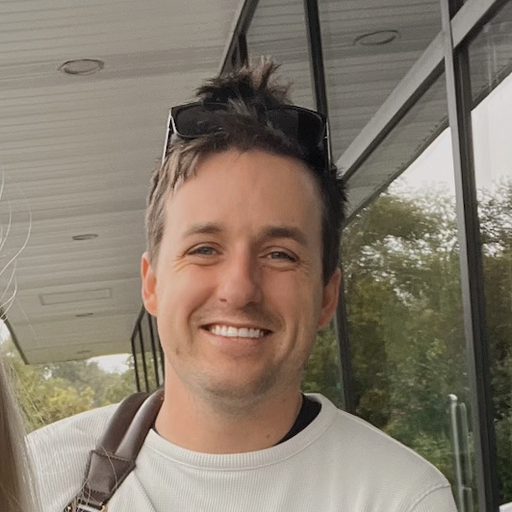
Joseph chatted with Lotanna "Lotts" Ezeike, an entrepreneur who has built and exited a few consumer apps. His latest win? Pray Screen, an app that makes you pray before unlocking your phone. It hit $120k ARR in 6 months and got acquired within a week of him tweeting about it. Not bad!
Like I typically say in these recaps, it didn't happen overnight. As I mentioned above, Lotts has built and sold multiple apps - but he uses the same playbook. Namely, he doesn't look to invent a massive hit, or even go for the next big thing. He simply finds what's already working, and makes it better for underserved markets.
Let's dive in on the takeaways!
The Pray Screen story and the copy-and-adapt playbook
Pray Screen launched in December 2024. Within 5-6 months, it was already doing $120k ARR. Then Lotts tweeted about a potential sale, and buyers started sliding into his DMs.
The app itself? The concept was simple (and also not new): before you can open your apps, you have to pray. It's similar approach we've covered previously with other interviews, such as apps which make you do push ups before opening social media. Or One Sec, which forces you to breathe for 3 seconds before opening Instagram. One Sec was making $100k a month with that mechanic.
Lotts saw the opportunity and thought, "I normally build in the faith space. Let me just copy that, but for Christians."
His early results were incredible! Users were praying four times a day, with 60% retention on day 30. When he initially downloaded One Sec and saw its numbers, his immediate reaction was, "Wait, they're making $100k a month doing this?"
The mechanic was proven, and obviously, the market was there. He just needed to find an audience that wasn't being served. And, that really sums up how Lotts operates in the consumer space. You find something that works (early validation) and remix it for a whole new audience.
This pattern repeats across his portfolio. While most people struggle to build their first successful app, Lotts has already sold four. He's not chasing moonshots, but that's benefited him quite a bit I'd say. Instead of chasing the big hit, he's building a system for smaller, repeatable wins.
Viral TikTok and the 70% rule
Growth for Pray Screen came primarily through UGC (not surprising in the consumer apps space) on TikTok. Lotts ran about 10-12 TikTok accounts with an agency's help, testing different hooks and content styles. As someone who recently tried an agency myself, I have to say — offloading that work is a big unlock. Clearly, it's working for Lotts (my early returns are promising, too).
Along the way, he had a video hit on the algorithm. This one video accounted for 70% of their installs. Not 70% of one channel, but 70% of all installs, in total. They tested around 20-30 videos with similar angles, but that one just hit and resonated. Even Lotts can't fully explain why, which, I think, is an important point. With UGC, you don't know what will win, you just have to take several bets and try out quite a few videos.
With a winner on their hands, they repurposed it as an ad, it performed just as well.
In terms of content creation, Lotts looks for one specific emotion he wants people to feel, then builds everything around that. For Pray Screen, they leaned into shock value and encouraging comments (which TikTok loves). They were strategic with music too — using specifically Christian songs that people would recognize and mention. More comments meant more engagement, which always leads to more reach.
His video formula was straightforward:
- Show the splash screen for half a second.
- Skip onboarding complexity.
- Show the main prayer interface.
- Then, the congratulations screen.
Three screens, that's it. With that framework he could start making videos that could strike.
When ads beat subscriptions
Pray Screen's conversion from install to paid was about 2.5%. I think that most developers would see that as a problem to fix, but Lotts didn't.
If only 2.5% convert, that means you're telling 97.5% of users to try something else (or they are telling you). But remember, Pray Screen had 60% retention on day 30. Those users were praying four times daily! So, instead of obsessing over conversion rates, Lotts simply added ads. At 5 cents per user, per day, the math worked in his favor:
- His cost per install around 70-80 cents (sometimes as low as 39 cents!).
- So, break-even was around 14-15 days.
- That means the math put his 30-day revenue at around $1.50 per user.
With 60% of users sticking around, that's a lot of revenue from people who never paid for the subscription. I thought that was a good case of looking at the problem from a different angle. Typically, I'd see that as a problem to solve via price tests, feature gating, or something along those lines. Lotts just went straight for ads, and it makes sense for his use case.
The exit philosophy of speed over maximum price
When Lotts decided to sell Pray Screen, he got multiple offers. Even with a healthy pool of offers to consider, he closed within a week.
His philosophy on exits is a bit more pragmatic than I've typically seen. Lotts: "I would rather take the third highest price if they can close in the next four, five days." Why? Because a lot of these deals fall through. In his experience, somewhere around 90% of them.
Since he has sold multiple apps, he was able to share some math. His typical multiples ran about 2-6x ARR. Buyers want at least 3 months of consistent revenue history. So, no spikes where you're at $100k one day but then fall to $20k the next (but those numbers are a problem I'd love to have!). He also recommends offering a couple of months of transitional support to sweeten the deal.
Also, Lotts never does internationalization before selling. It's a clear growth lever he can pitch to buyers. "We haven't tried these languages yet" is more attractive than "We tried everything and this is the ceiling."
The faith space historically was massively underserved
Pray Screen wasn't just first in its category, at the time, it was the only one. That's since changed in big way, the faith space is quite a large category now. After Pray Screen started doing numbers, suddenly there were around 70 listings. In the age of AI coding, people will jump in quick when they see something working.
Another one of Lotts' earlier successes was Bible Buddy, which hit 100,000 monthly active users. It started as a WhatsApp bot before becoming an app. His growth hack there was Twitter ads targeting followers of celebrity pastors. He guessed that if you follow a specific pastor, you're probably Christian. Twitter let you target followers of specific accounts, so Lotts listed the top 20-25 famous pastors and ran ads to their followers. He was snagging installs for pennies at one point, which I have previously never heard of.
Lotts even jokes about someone needing to create a Bible-themed survival game. He discovered White Out Survival was making $53 million per month, and every prayer app user was seeing their ads. The Bible has no IP restrictions and tons of stories, and there aren't a ton of games around it. Who knows, it could work!
Some advice for first-time builders
Lotts' advice to aspiring app creators is direct, try hard to get your first win first! Everyone wants to be the next Blake Anderson with millions in ARR. But, it's hard to hit that on your first try. Instead, aim for the $5k to $10k MRR range. That's an attractive, sellable range for buyers. It's also proof you can execute. Even at modest multiples, a $60k annual run rate app could sell for $120-180k. For most people, that could be life-changing money.
The skills you build matter more than the size of the exit. Once you've shown you can find a niche, build a product, drive traffic, and monetize it, you've de-risked yourself for future projects. Investors and buyers will trust you because you have a track record. And, the people you meet along the way could become future collaborators. The buyer Lotts sold Pray Screen to is someone who had wanted to acquire Bible Buddy two years earlier. They closed in three days because they already knew each other.
As someone who has sold two apps, I can attest to that too — a personal relationship with a colleague generally makes for a smooth exist.
Wrapping up
Lotts' playbook is proof that you don't need to innovate, it's honestly just about execution. Find some proven concepts, adapt them for underserved audiences, and try to move fast. Each app becomes a learning opportunity that compounds your skills and credibility.
As always, keep it locked to our YouTube channel to catch the full interview. I try my best with these recaps, but that's always the best way to learn from these. And, if you're new to Superwall, go grab a free account and start growing your app today!