Why Users Cancel Free Trials Instantly (And How to Prevent It)
Reduce early churn by addressing cancellation anxiety and accelerating time-to-value.

Users on iOS tend to have a habit of cancelling trials directly after starting them:
I admit that as an iOS user myself, I tend to do this often. Typically, this behavior is influenced by two things:
- The obvious reason: It’s easy to cancel trials on iOS in comparison to other platforms.
- And, users don’t want to forget to cancel a trial and get “accidentally” charged.
If you’re seeing this pattern happen in your own app, don’t get discouraged. It’s common in our industry, but that doesn’t mean you shouldn’t try to mitigate it. In this post, I partnered with our growth expert, Nick, to come up with some actionable tips to combat this behavior.
Trial reminders
First, try implementing trial reminders. The idea is simple, you make a promise to a user starting a free trial that you’ll remind them when they’ll be charged if they don’t cancel. Here’s what it looks like:
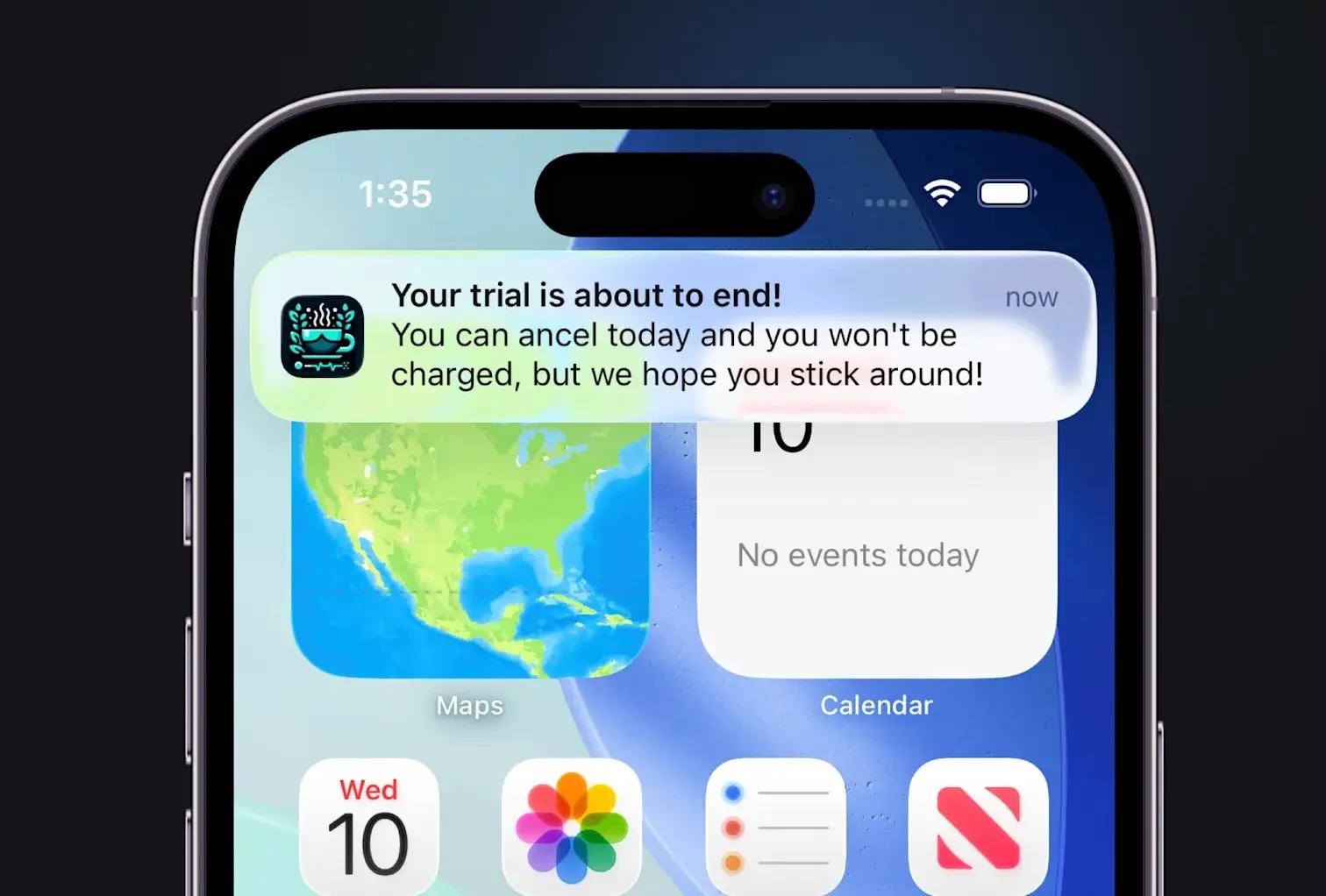
The idea is simple — the user will receive a push notification before their trial ends. This reminds them to either cancel the trial if they don’t want to be charged, or stay onboard to keep their “pro” features. At Superwall, we’ve seen this work time and time again. It lets the user have some peace of mind about the trial terms, and it avoids the common friction point so many have with trials. That is, forgetting to cancel them if they aren’t convinced to stick around.
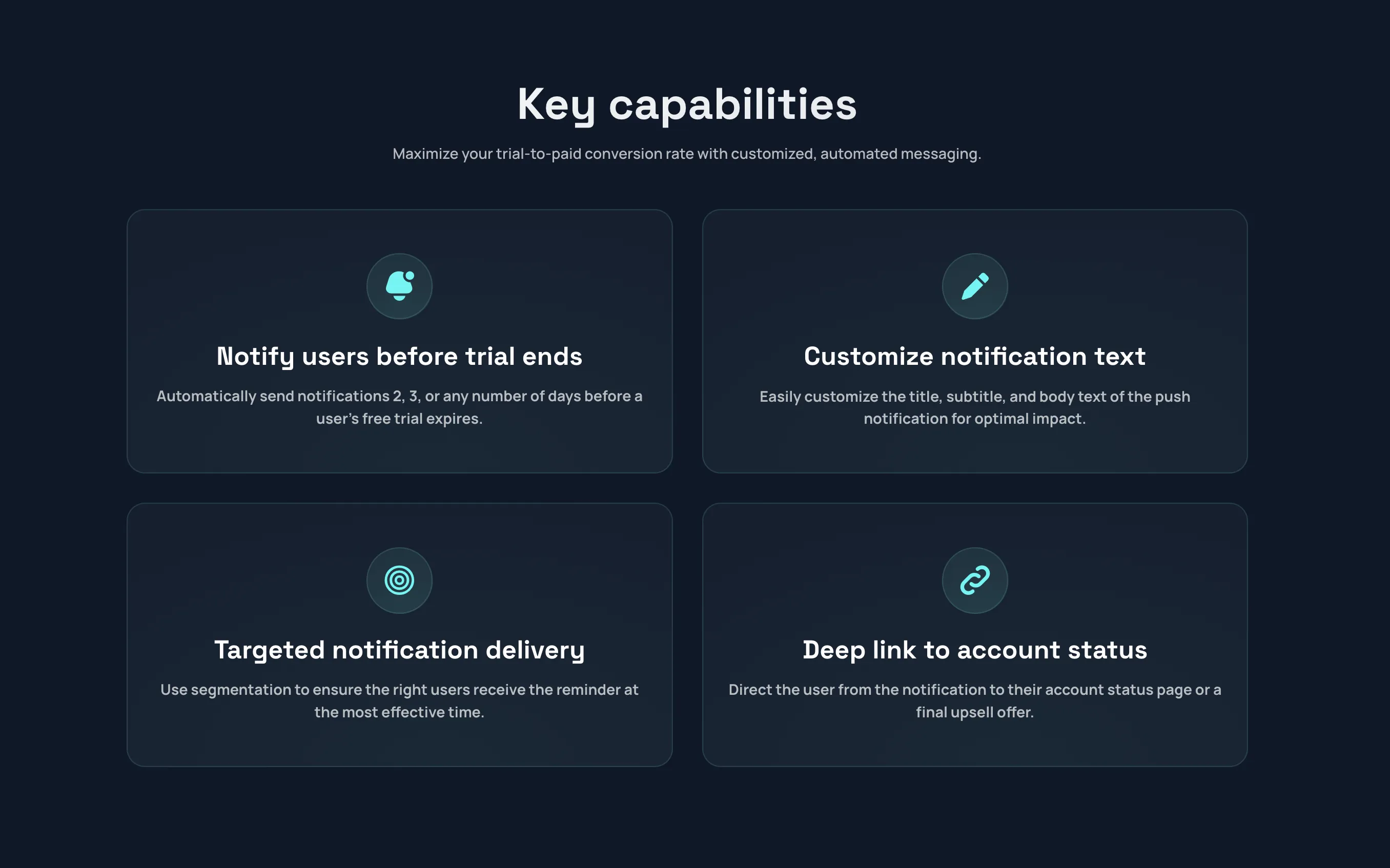
In Superwall, we have built-in support for this, too, along with some feaures baked in around it:
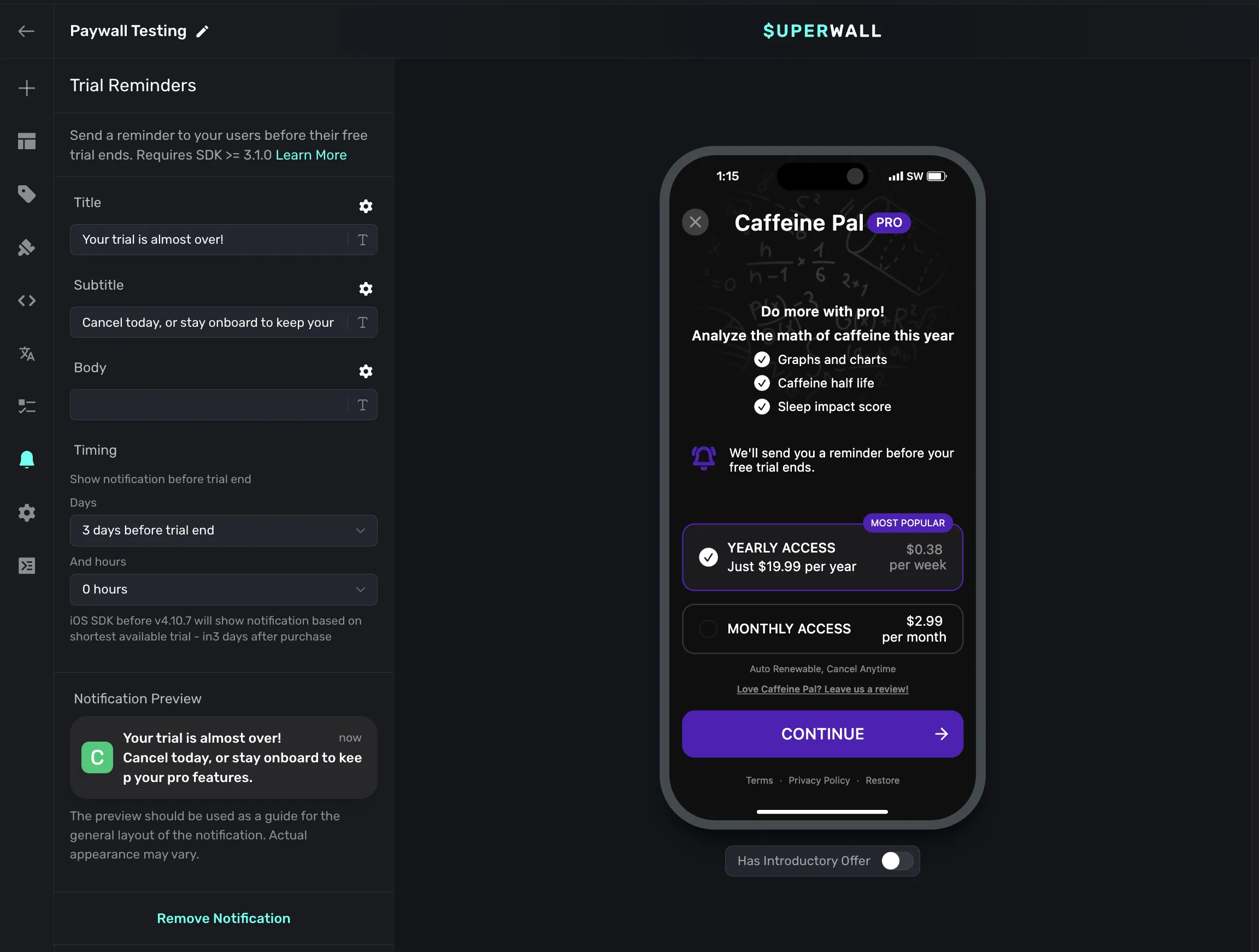
Setting it up is easy. Just open your paywall to associate the reminder to, and click the bell icon on the left sidebar to activate it:
Get to the “Aha!” moment, quickly
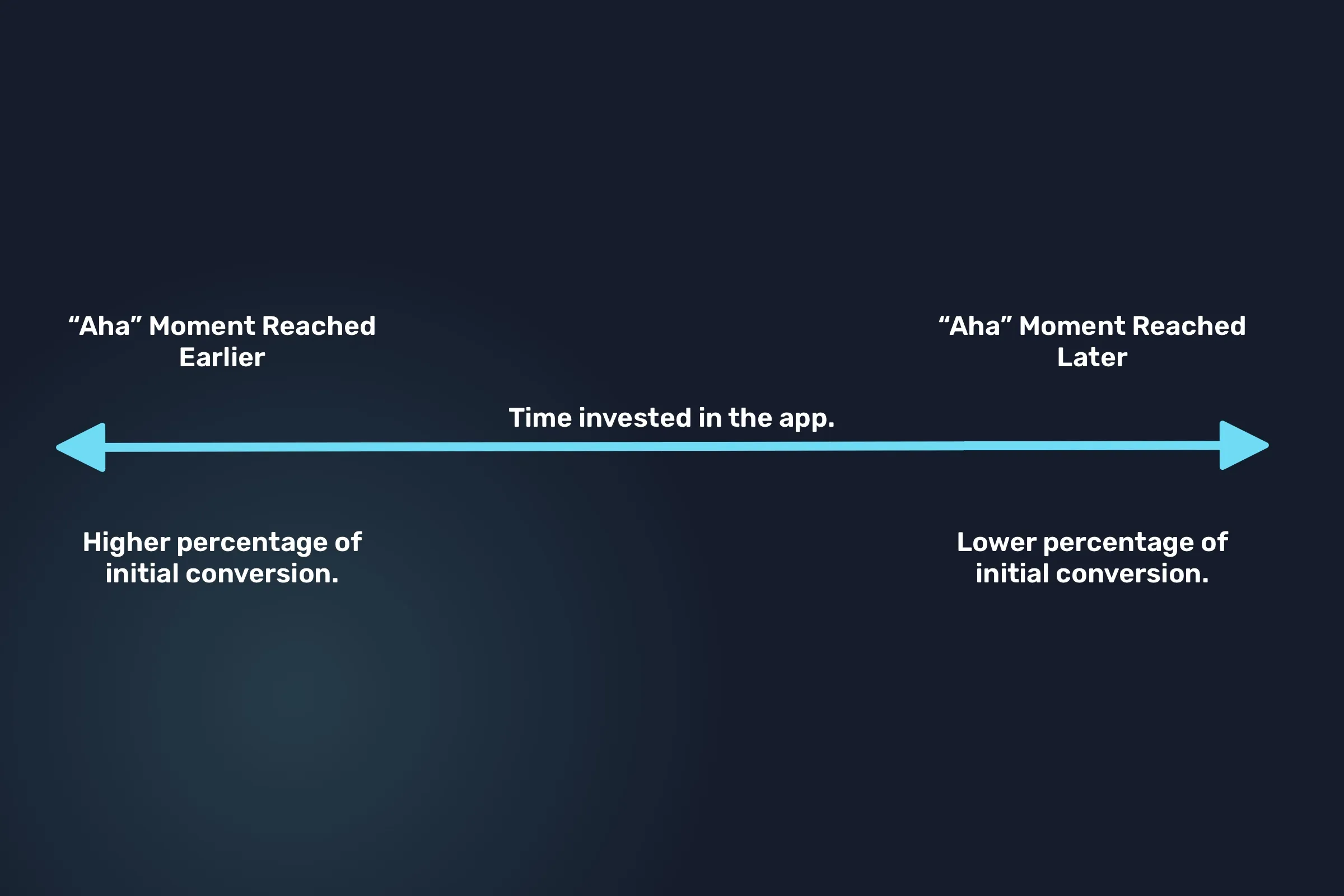
The “Aha!” moment is, arguably, the best deterrent to quick cancellations. It’s the part of your app’s experience where the user realizes it’ll solve the problem they downloaded the app for. It looks different for each app, but for some examples…
A weight loss app might show someone how they’ll actually lose weight:
It could be a plan that was personalized just for them. Or, social proof along with a clear path ahead of what they’d need to do to hit their target goal. If they hit the “Aha!” moment, they’d think something like “Okay, here’s how I can use this app to lose weight.”
A budgeting app could explain its tools to stay on budget:
After inputting a budget and other income or expense data, a budgeting app could present its tools in such a way that it reassures the user they’ll stick to their budget. At this moment, it clicks for them — making them more likely to convert.
To make things more formulaic, think of it like this: The “Aha!” moment for your app is where you show, or convince, a user that problem X is solved by Y. But, they have to believe it, and that only happens if you can explain it clearly, and quickly.
For many apps, it helps to hit the “Aha!” moment during onboarding. When Nick offered to a do an onboarding and paywall teardown for my own app, Elite Hoops, he quickly noticed that I needed to get to the “Aha!” moment faster. By retooling copy and what I emphasized during onboarding, my initial conversion rate jumped up. The coaches downloading it better understood how the app would help them coach better, share plays, or run practices.
If you’re interested in seeing his other paywall tips, you can read that post here: 4 Lessons Learned From an Indie App Paywall Teardown.
Create proxy “Aha!” moments
The “Aha!” moment is critical to avoiding early trial cancellations. For some apps, though, it’s not possible to reach that moment early on in the process. For situations like these, consider creating “proxy” moments.
Proxy moments showcase what will happen, or preview an expected outcome, if they keep using your app. For example, in a finance app, preview the result of sticking to a plan. One app that does this well? YNAB. In the onboarding, YNAB (which stands for “You need a budget”) walks through how your money will work, and why it’ll be better using their tools:
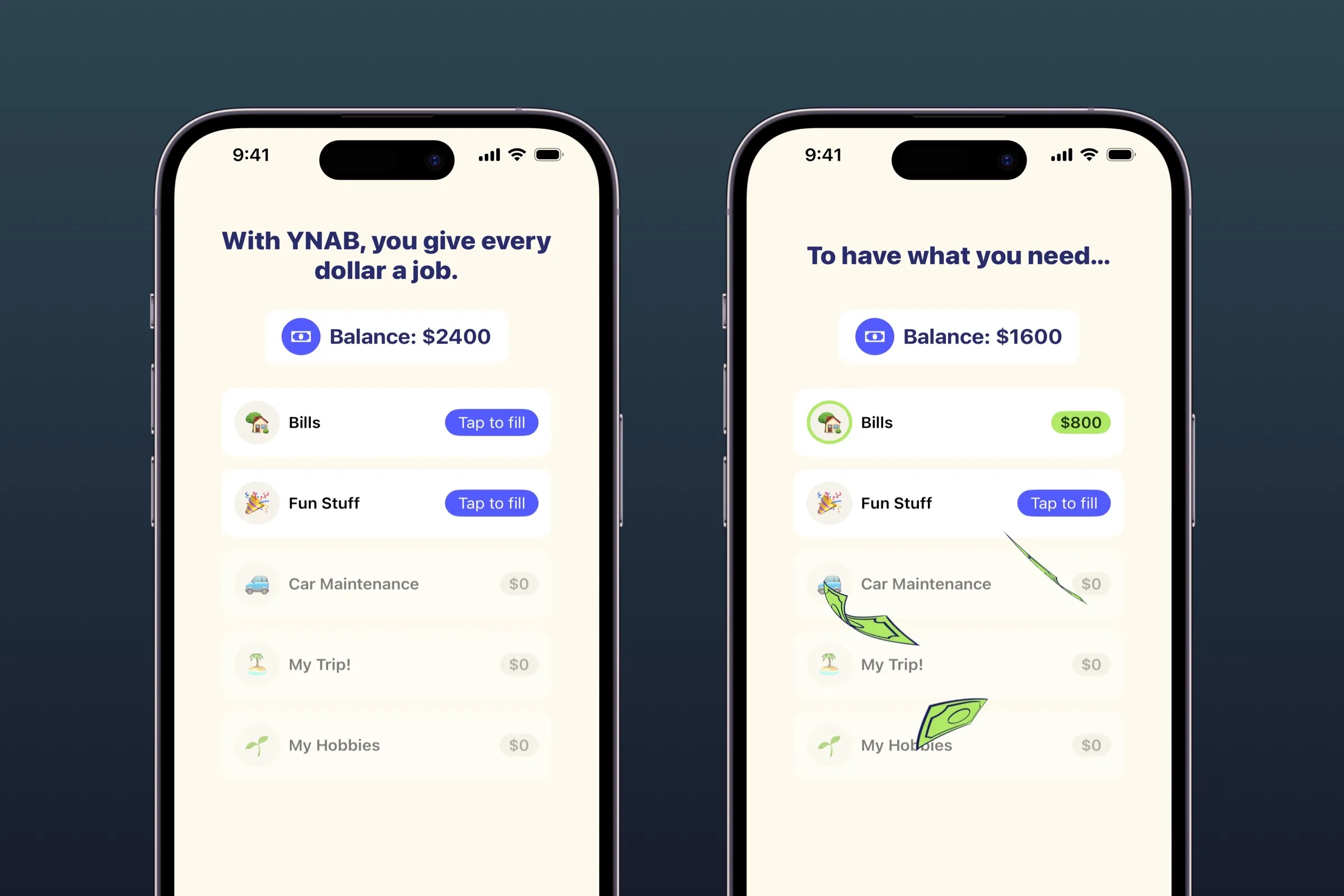
Basically, you want to show them why this is a trial worth keeping.
Respond to early cancellations
Sometimes, users will cancel. No matter what you try, what you show, or what you change — there are several users who simply will cancel the trial right after it starts.
If that happens, try to convince them to stay. One way you can do that is by using our webhooks. When a user cancels their free trial, respond to our webhook event for this and:
Try sending a personalized email:
You can add user metadata to our webhooks, so you can get things like the user’s name, or some identifier to look it up on your own. Using that, you could craft an email reminding them of the features they’ll lose once the trial expires.
You could present them with a one-time offer:
For these, set up a product that has a discounted first year, and then it renews at the standard price. At Superwall, users often do something similar with transaction abandoned campaigns.
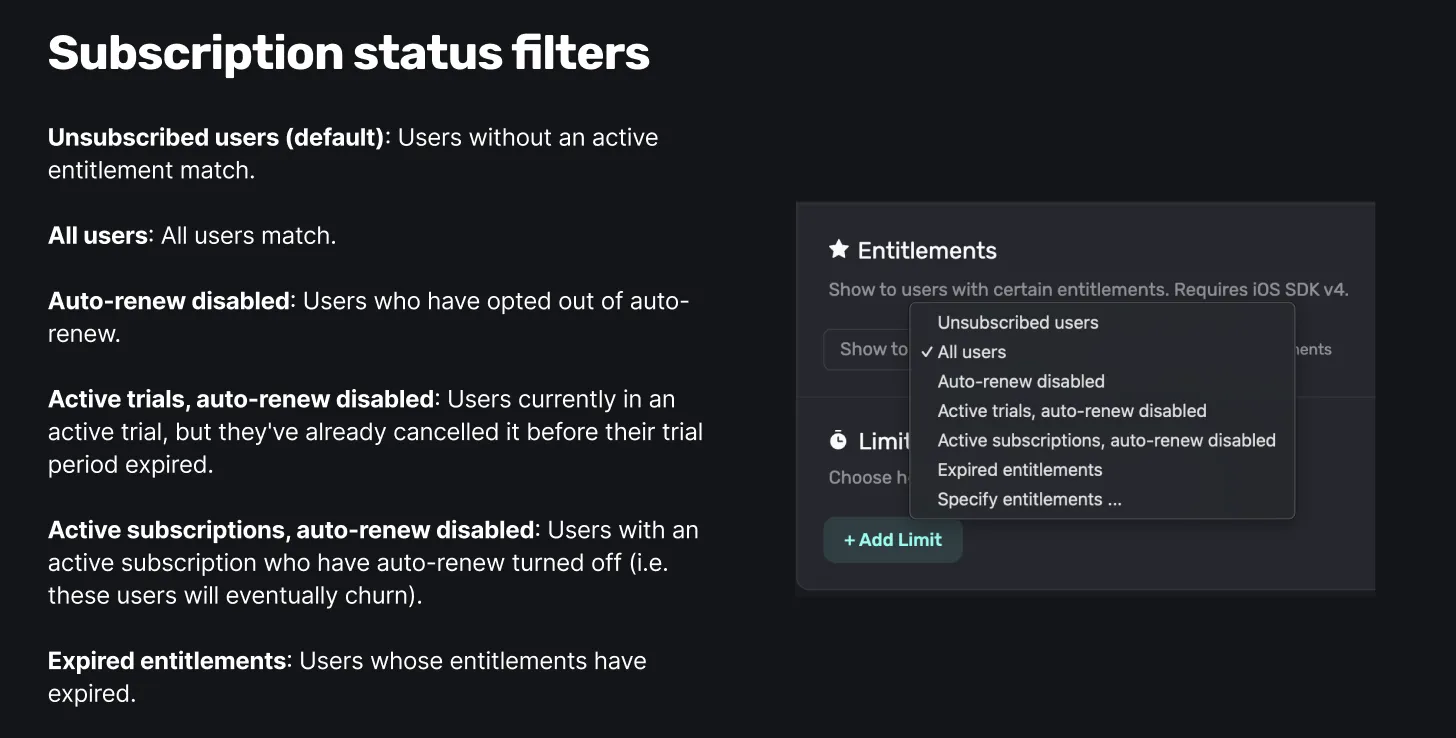
Or, you can prompt them in-app. Using our new subscription-based filters, it’s easy to target users who are in this exact state (the trial is still active, but it’s been cancelled):
Then, you can present in-line paywalls or messages using Superwall. You can
detect this state at the SDK level too. Just use the CustomerInfo object. Or, maybe consider a popup paywall:
Wrapping up
Early trial cancellations happen in every industry, and they aren’t centralized to only iOS. But, I’d argue they are most common here. So, try to use some of these tips to encourage users to see their trial through. Then, they’ll be better equipped to make a purchasing decision (as opposed to right after downloading it).
Of course, you can easily try all of these techniques in Superwall. If you haven’t already, sign up for free today to get started.